Showing posts with label PS2. Show all posts

Tuesday, November 20, 2007

Tales of the Abyss

Tech Info

Developer: Namco Bandai Games
Genre: RPG
Release Date: Oct 10, 2006
ESRB: TEEN
ESRB Descriptors: Alcohol Reference, Fantasy Violence, Suggestive Themes, Simulated Gambling, Language


US,
October 11, 2006 - Even though they may not receive as much mainstream attention as other RPGs, Namco Bandai's Tales franchise has just as rabid a fanbase as other popular titles. Regardless of whether the games are beloved by all (like Symphonia) or wildly debated (like Legendia), it can easily be said that each title in the Tales series is highly anticipated. Tales fans, take heart: the latest chapter, Tales of the Abyss, lives up to the enthusiastic hype with an extremely deep and expansive RPG.

The game centers around Luke fon Fabre, a sheltered young nobleman from the Kingdom of Kimlasca-Lanvaldear. Sheltered is perhaps a bit too tame of a description: spoiled is perhaps a bit more accurate for Luke -- he has no concept of how the outside world works or how to properly interact with people outside of his castle. As a result, he simply expects that people will assent to his will because every other servant and suspect has done so for his entire life. At least, what he remembers of his life. See, Luke was violently kidnapped when he was a child, and the trauma of the event completely erased his memory. As a result, Luke was confined to the "safety" of his castle until it was deemed safe for him to return to the normal world. So Luke remains cooped up in his castle, interacting with his closest servant Guy, receiving sword training from his teacher Van, and generally being bored senseless.

However, one day Luke's safe existence is completely torn apart when a mysterious woman named Tear invades the castle and attempts to kill Van during one of his training sessions. As Luke confronts her, a rare warp known as a hyper-resonance occurs, transporting them deep into the Malkuth Empire, an enemy country that has a very terse peace with Kimlasca. Finding himself out in the real world for the first time and potentially in danger, Luke attempts to make his way back to the safety of Kimlasca. However, his path back to his homeland is tied to events foretold by the Order of Lorelei, an ancient order that holds a mystical prophecy known as the Score (which governs just about every facet of life) that speaks of a time when a chosen one will arise and lead the world into prosperity. However, this prosperity is also threatened by impending war and a potential plot by the most unlikely conspirators of all. Of course, Luke and the assorted characters that he gathers find themselves trying to avert disaster on a global scale.

While this may sound like a generic, even clich¿d premise for an RPG -- particularly the chosen one concept that you've seen in tons of other games -- Tales of the Abyss manages to veer away from these standard pitfalls with a number of twists and turns to the plot that keeps the game moving in unexpected directions. (For instance, the chosen one idea is actually turned on its head about halfway through the game.) Abyss also has a number of memorable characters that will join you in your quest, such as a sacred animal known as a cheagle who has a knack for setting things on fire, a young girl that uses a massive stuffed puppet as a weapon, and an infamous necromancer in the service of the military. You'll also face off against a group of unforgettable villains, many of whom have some serious character quirks -- Dist, I'm specifically thinking of you as an example! But perhaps one of the more interesting facets of the game comes in Luke's perception of these characters and the rest of the world. I'll admit, at first, I hated his character: his constant whining about what he missed from his comfy, sheltered world, his refusal to understand that the world didn't revolve around him and his overly simplistic views. However, as the game went on, I found myself overlooking his stupid social inadequacies in favor of placing myself in his shoes, learning more about this strange new land as he did.

Fortunately, a number of standard features from the Tales franchise make this exploration at the same time of the main story. Players can literally spend dozens of hours collecting raw materials for trade in towns, track down and perform favors for NPCs or other tasks. While that may seem like busy work, you'd be surprised how much performing some of these jobs actually engaging for players, particularly the number of the side quests and secondary stories going onchanges some aspects of the world, such as stores that open in cities. You probably won't find every single job available to you in your first play through, which only furthers the replay ability of Abyss. The only downside that does crop up to performing quite a few of the side quests is that some sections of the game can be extremely linear, preventing you from going into some towns at certain moments in favor of moving the story along. This can be particularly disappointing especially when you know where you need to go to fulfill some task, and yet you know that you'll just need to hold on till later to complete the goal.

You'll also find classic Tales elements such as cooking to restore health and skill points (known in Abyss as TP) makes a return, and various characters will be radically stronger at certain recipes than others, even adding new twists to generic items like sandwiches. Players will also go through various mini-games, such as casino games, stealth puzzles, and even battle arenas to improve your party. Players will also find that skits are included as well to give you further insight into the minds of party members at specific times during the adventure. Even though they're not voiced over like the cut scenes, they really fill in the details of the story and add a secondary level of depth to the plot that you wouldn't experience simply from a cut scene after a massive battle.Speaking of battle, Tales of the Abyss features a revamped battle system. Characters have both a regular and special attack available to them, as well as the option to guard from incoming attacks. The guard isn't provided to completely escape damage; instead it lessens the impact of a strike that you receive. However, past these general moves comes the option to also move around on the battlefield, positioning your characters to the side or behind monsters to inflict more damage or set up combination attacks with your party members. As time goes on, you'll also discover new abilities called artes which you can assign to one of eight shortcuts that can be used in battle, and special gems that you can equip in places known as fon slot chambers to boost the effectiveness of an activated arte. You can also strengthen your party members with the use of Capacity Cores, special items that augment your character stats like the power of your strikes or your magical defense. Once again, you probably won't unlock every Capacity Core or arte, giving you even more of a reason to replay the game to collect stronger attacks and abilities.
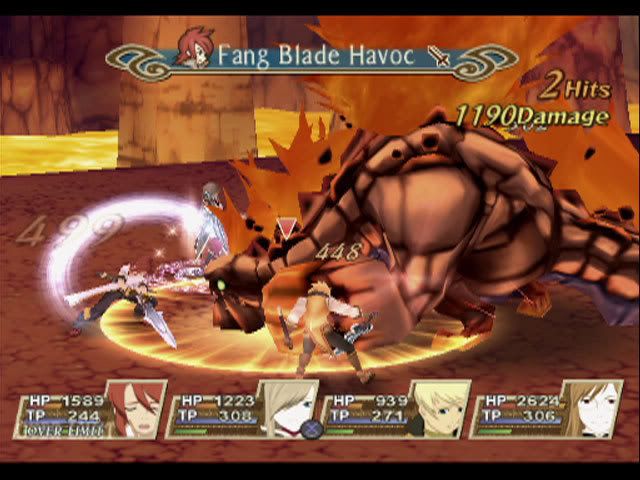
For the most part, you'll be pounding both the regular and special attack buttons, landing strikes and protecting yourself with guards from incoming attacks. However, there's one other feature known as field of fonons, based around the concept of six elements (earth, wind, water, fire, light and darkness). During a battle, one of these fields may manifest itself with a specific elemental focus, allowing you to trigger a special attack on a targeted opponent. However, there are a few catches to the FOF setup. First of all, the amount of space that these fields will often occupy will be so incredibly small that you'll need to be in the right place at the right time to pull off the attack. This can often result in missed opportunities to trigger these strikes. What's more, you'll need to wait until these fields have a color that aligns with its particular element. If they appear and they're colorless, they are useless to your party. However, the majority of fields that crop up wind up being colorless, further reducing your chances to actively trigger an FOF attack. In fact, you may find that relying more on the artes and your basic attacks are a much more dependable way of killing opponents instead of waiting for a fonon field to align itself.

You'll take any one of your four party members into battle, and while you have the opportunity to have up to three other friends control the other party members via multi-tap, you're not really going to use this feature often, simply because your friends would merely be sitting around until you run into a fight. In their place, you'll rely on the AI of the computer and various settings that you'll place on your party members to fight alongside you. For the most part, the computer will do exactly what you want it to, attacking or using their skills effectively. However, there are moments when you will want to shoot them because they'll run directly into harm's way, not use an item or skill to heal themselves, or stand around ineffectively. You'll also wish that there were some fights that you could have the game skip or fight for you, because the loading screens between battles can sometimes take longer than the actual fights themselves. Finally, and perhaps one of the most confusing facets of the battle system comes in the fact that you'll be exposed to certain elements of it before it's cleanly explained to you. I stumbled my way through using fonon fields and specific arts for more than 10 hours before I had all of them cleanly explained by one character in the game. Why the game decides to handle combat in this manner is anyone's guess.

Fortunately, the visuals are relatively decent -- as far as the character models are concerned. Designed by Kosuke Fujishima, (who worked on both Tales of Symphonia and Tales of Phantasia, as well as the manga series Oh My Goddess and Sakura Wars), players will easily get a sense of the personalities of the characters, particularly within the various skits and cut scenes. This is bolstered by the solid voice acting found within the game, which is impressive considering the sheer amount of spoken lines in Abyss. Unfortunately, a number of the environments that you'll adventure through are relatively plain. Battlefields in particular are extremely generic, which really stand out in contrast to the character models of your party, the enemies that you face off against, or the effects from special abilities.
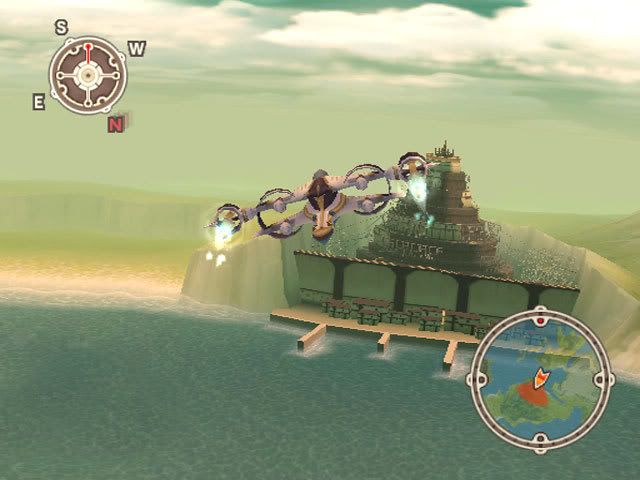
Tales of the Abyss is one of those games that should please die-hard Tales fans and win over a number of newcomers to the series. Lots of memorable heroes and villains, tons of missions and side-quests, and lots of goals that you won't exactly discover or finish on the first play through helps add to the game. However, some linear plot directions, long load times and a quirky battle system that sometimes degenerates into button mashing bogs down what is otherwise a thoroughly enjoyable RPG.

This Zone Details >>>

Monday, November 19, 2007

Valkyrie Profile 2: Silmeria

Tech Info

Publisher: Square Enix
Developer: Tri-Ace
Genre: RPG
Release Date: Sep 26, 2006
ESRB: TEEN

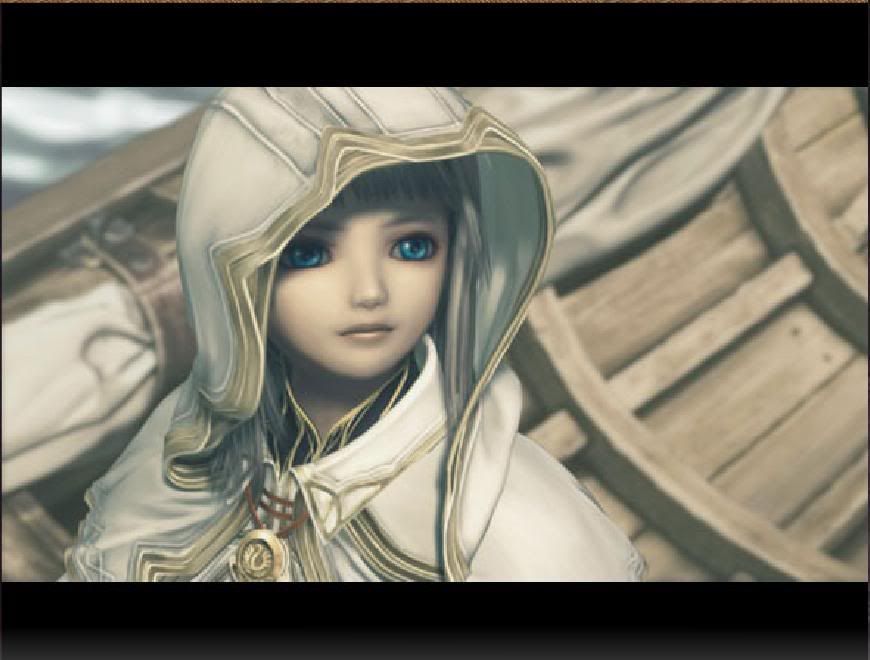
Valkyrie Profile 2: Silmeria is the long overdue sequel to its predecessor, which was released some seven years ago. Unlike many of the other series in the Square Enix lineup, this title actually has significant relevance to its first installment. In fact, VP2 is slightly different in the respect that it is much more linear and story-driven, while the original VP was much more open-ended. Linear isn’t necessarily a bad thing, though. The storyline is epic and very immersive. It can easily stand on its own for newcomers to the series, but it also adds more depth and appreciation to the history of Midgard, Asgard, and all the realms in between for veterans of the original Valkyrie Profile.

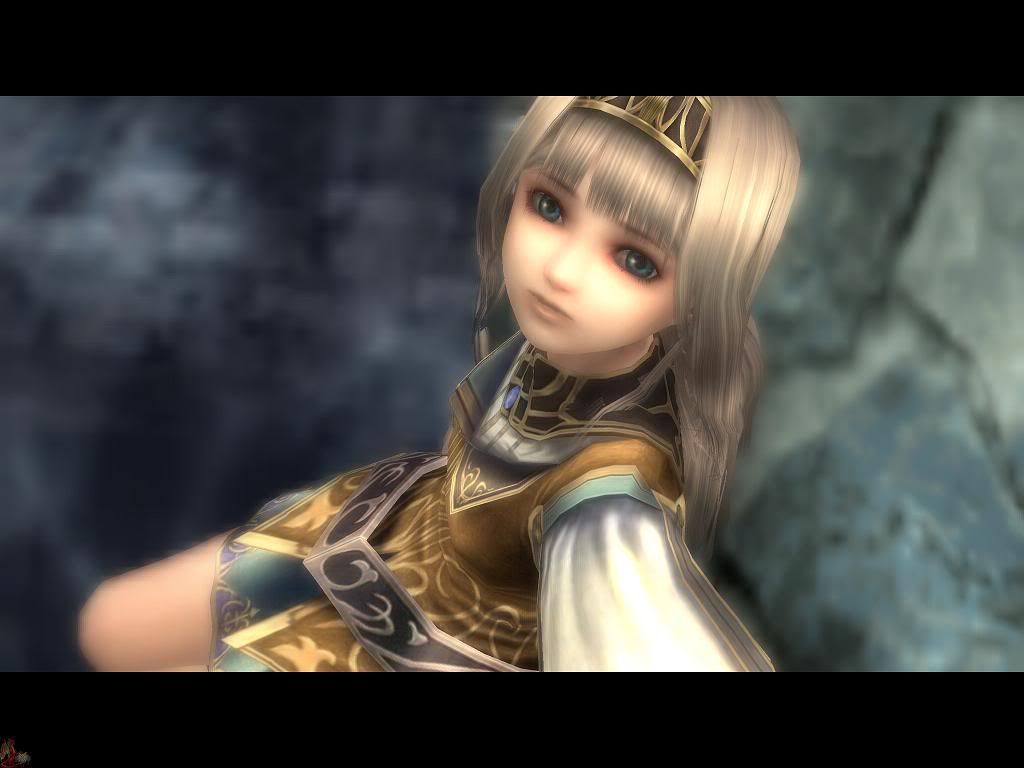
The story focuses around the struggles of Alicia, the young Princess of Dipan, who was banished by her father King Barbarossa because she is the involuntary vessel for two souls – her own and that of the valkyrie Silmeria, banished from Asgard by Odin for opposing his will. VP2 is a tale about opposition and revenge against the gods, and Alicia becomes an instrument in that crusade against divinity. Without spoiling the story, the young princess befriends a cast of support characters, from loyal knights to mercenaries and treasure hunters. The tough talking, heavy hitting Arngrim makes a return appearance in VP2, and this bad boy hasn’t lost his touch since his debut back in 2000.

While the cast of primary characters develops nicely, it is important to note that the Einherjar, spirits of slain heroes chosen by the valkyries, play a less significant role in the second installment of the series. While they were the focal point of Lenneth’s time on Midgard in Valkyrie Profile, they serve as combat support more than anything else on Silmeria’s journey. Their former lives are not nearly as glorified as they were in the original. As such, their stories are resigned to a few short paragraphs on the status screen. Thankfully, the main story is more than beefy enough to move along without needing the support of disjointed, and sometimes nonsensical, side stories.

Veteran players may remember Valkyrie Profile’s signature battle system, which involves each participant being assigned to one of the four right thumb buttons. That system returns in the second installment with a few modifications. Most radically, a free movement system is implemented, which means you have to actually move into attack range in order to hit an enemy. Also, unlike the vast majority of RPGs out there, you don’t win by wiping out everything on the battlefield. Battles can be won quickly by eliminating the enemy group’s leader. In fact, players are encouraged to end battles in as little time as possible, and they may be rewarded with usable items.

Also, all actions besides standard movement and Soul Crushes use a predetermined amount of AP, or Action Points, and player weapons have a preset attack limit, between one and three strikes per attack turn. The kicker is your party shares a single attack bar, which means button mashers have no home here, whereas that elementary play style was almost encouraged in the original VP. By timing attacks properly, you can maximize damage output and, ideally, unleash a series of devastating (and absolutely spectacular) finishing moves – the aforementioned Soul Crushes.

The skill system has been modified as well. The teach-by-item approach is gone this time around. Instead, players must discover combat skills through their gear. Each piece of gear is assigned a color, as well as a rune. Skills are learned by matching up like-colored gear with different rune combinations. For those of us not versed in ancient Norse runes, and that’s probably the vast majority of us, the runes flash when linked to other runes that will produce a skill. It’s all a bit much to grasp at first, and it takes a high degree of experimentation to get results. There are some tutorials in the early part of the game that help explain the concept, but the best way to learn is definitely through practice.

Dungeon crawling retains much of its original flavor. Even though the 3d models are very well done, VP2 plays much like its older sister. The general concept of puzzle-oriented side-scrolling dungeons, which is unique to the series, returns in full force. This time around the backgrounds are less like a cartoon and more focused on a sort of stylized photorealism. Think Norse mythology married to western European style and Japanese storytelling at its finest. The end result is one all its own.

Players are given some degree of control over dungeon dynamics through the introduction of “sealstones.” By collecting and placing these stones on the appropriate dais within a dungeon, certain effects can be projected across the entire zone, such as shifting elemental weaknesses. In most cases, players start at a disadvantage, and it’s left to them to retune the effects to create more favorable conditions. Such an approach requires some foresight.

These changes in the general system will come slightly more easily to the Valkyrie Profile vets out there, but even so, the learning curve for Valkyrie Profile 2: Silmeria is pretty steep, even for a role-playing game. Expect to spend at least a good six hours in the beginning just getting used to the shifting camera angles in battle, which can be a bit awkward to all players, seasoned or not. If you can get past the huge learning curve, the end result is well worth it. Controlling a battle beyond the typical point-and-click-a-menu approach is a very refreshing change, indeed.

All in all, this Square Enix title will not disappoint. The visual design and world class storytelling alone make this one quite a force to reckon with on the game store shelves. Whether the captain needs an epic story to feed his mind or flashy, high power combat skills, VP2 is a prime example of both eye and mind candy. The original Valkyrie Profile lacked the exposure to bring it into the spotlight, and as a result, many players missed out on one of the role-playing masterpieces of the time. Thankfully, Silmeria does not have to suffer the same fate. This blonde is a pleaser, not a teaser. We do have our own contemporary saga, and it’s called Valkyrie Profile 2: Silmeria.

This Zone Details >>>

Sunday, November 18, 2007

Rogue Galaxy


Tech Info

Publisher: SCEA
Developer: Level 5
Genre: RPG
Release Date: Jan 30, 2007
ESRB: TEEN
ESRB Descriptors: Blood, Crude Humor, Mild Language, Use of Alcohol, Violence, Use of Tobacco, Mild Suggestive Themes


Gameplay :

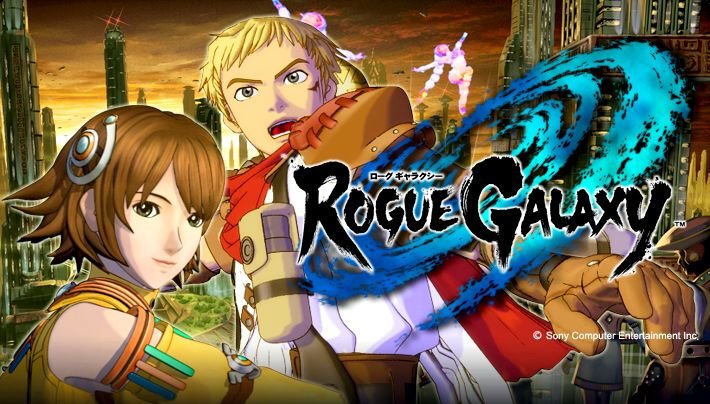
Rogue Galaxy is an RPG from the Level 5 developing team, the same people who brought you titles like Dragon Quest VIII and Dark Cloud. The story revolves around a young man by the name of Jaster Rogue, who lives on the desert planet Rosa. A war has broken out in the galaxy, and Rosa is an enslaved planet. When a beast breaks its way into Jaster's village, the soldiers who are occupying the area are no match for it. A cloaked man in town accompanies Jaster on the way to fight the beast, but mysteriously leaves after spotting two figures watching them. Leaving his sword to Jaster, the mysterious man vanishes without an explanation.

The two figures watching Jaster are revealed to be two space pirates by the name of Steve and Simon who are on the lookout for someone called the Desert Claw to recruit in their ranks. After fighting the beast and seeing Jaster's impressive fighting ability, the two are convinced that Jaster is the one they seek. Eager to fulfill a lifelong dream of traveling the galaxy and to save his enslaved planet, Jaster goes along with their assumptions, and joins Steve and Simon among others as a space pirate.

Admittedly, while it's a fun story, it isn't terribly original or new in the realm of RPGs. An exceptional young man swept up in circumstances that lead him to becoming the hero of the day is pretty standard. Still, there's more to Rogue Galaxy than meets the eye. The story and overall feeling of the game is rather lighthearted, but there's a deeper level to the story and the characters. While there is plenty of humor involved in the story, there are some more serious moments as well and the two elements are balanced out quite nicely.

The only problem story-wise is that the characters, while interesting and quite likable, are not the deepest bunch that I've seen in an RPG, and some of them tend to run along the lines of stereotypes at times, making some developments rather predictable. Still, that doesn't mean that it isn't fun to watch the story unfold, or that it's hard to get attached to the characters. And it definitely doesn't mean that it isn't fun to play.

The battle system in Rogue Galaxy is a blast and offers an impressive array of variety in gameplay. Battles are action based and in real time. You may choose on the fly who you would like to play as in battle, and each character has their own fighting styles, special moves (which cost ability points, of course), and combos. The other two members of your party are only distantly controlled by you, in a style similar to the Star Ocean games: you can set up different battle strategies to dictate how you want them to fight the battle.

For instance, you can have your party members focus on one enemy, or fight independently and fight whomever they want. Your other party members will call out to you at times, and a menu will pop up on the screen with suggestions of what to do, such as using a healing item, or executing one of that team member's special moves. All of this is done while the battle is going, so you have to keep on your toes and think fast. Battles are also significantly more challenging then your average run of the mill RPG, but not unrealistically so, which keeps the battle system fun and interesting.

New abilities for your characters are learned through a system called Revelation, which is a grid where slots for various items are grouped together. Putting items in the corresponding slots and filling up the group that they are in will allow the character to learn new abilities. Then, a new group of slots that are connected to it are opened up, which lead to new abilities. Think of it as the Sphere Grid in Final Fantasy X, only with items like "sticky gum" and "iron cube" used to fill up the slots instead of spheres. The Revelation system is rather easy to get the hang of, and you'll be pleased to see just how large each character's grid is, allowing for many, many different learnable abilities. Some of these abilities are passive, like fire resistance, but they all play a part in how effective your characters are in battle.

Along with the main storyline and battles, the world of Rogue Galaxy is huge and there is plenty to see and do. There is a side game that allows you to leave traps with bait out wherever you like in order to catch an insectron, which is, well, exactly what it sounds like. You can feed, train, and even breed insectrons and then take them to the Insectron Tournament to fight other insectrons for, of course, rewards. The Insectron Tournament is Rogue Galaxy's main mini-game, something that, admittedly, a note that some one usually hate in RPGs.

But nine times out of ten, mini-games are frustrating and monotonous. You want to do them for those ultra-cool, secret, strong items that you can get nowhere else in the game, but you don't want to piddle away hours of monotonous gameplay just to get it. Pleasantly, the insectron mini-game isn't particularly frustrating, and hunting for them and training them in and of itself is kind of fun, since it can be done more or less “on the go” regardless of where you are in the main storyline.

Rogue Galaxy may occasionally fall into the realm of stereotypes and predictability, but it is undeniably fun to play, and has many unique aspects that keep it from feeling generic. In fact, it's a pretty unique game, within the scope of RPGs in general. The game’s weapon synthesis method, bizarre as it sounds, involves a sentient frog named Toady joining you. He's not a playable character, but instead, he eats two of your weapons, and spits out a better one for you! Does that make sense? No, of course not, but it doesn't have to. The whole process is actually rather funny to watch, but don't underestimate Toady. He can regurgitate some very impressive equipment indeed. Rogue Galaxy is, simply put, a lot of fun to play.

Graphics :

If you like Dragon Quest VIII's graphics, then you'll love Rogue Galaxy's. Done in the same cel-shaded style as DQVIII's (albeit without the “love it or hate it” talent of Akira Toriyama at the design helm), the graphics are distinctly like the design of a good anime with bright, vivid colors and well-defined lines that make the look of the game pop out and catch your eye instantly. Character designs are very well put together, and some of them are rather unique.

While it's true that Jaster is the typical, seventeen year old, handsome, blond hero, other designs such as Simon's rotund, heavily armored body and the villain Norma's bizarrely sinister, yet girlish ensemble are really interesting. Still, even as typical as Jaster may look, it's a look that works and it fits right into the world (or world's, I suppose I should say) that he inhabits.

And then there are designs that, even given the lighthearted mood of Rogue Galaxy, are rather, well, silly looking. Rosencaster, a frightening soldier and warden of a terrifying prison, looks like Frankenstein's monster. Scars, long, rectangular head, the whole nine yards. And there are people with cartoony shark heads as well. Yes, I said shark heads. While all of these designs are admittedly a matter of personal tastes, I simply found it hard to get past some of them. There is a point at which creative liberties spill over into silliness, and unfortunately, Rogue Galaxy’s character design does get to that point occasionally.

World designs are quite beautifully done, however. Whether it's the huge, desert world of Rosa, the green and fertile jungles of Juraika, or the sprawling metropolis complete with flying cars on Zerard, Rogue Galaxy is just fun to look at. Colors, shading, lines, and frame rate all run together easily and smoothly. The CG is also smoothly put together and looks great, and really, isn't all that far off from the in-game graphics, which is rather impressive. Rogue Galaxy looks beautiful, and there's enough creativity and variety in its looks that it avoids feeling like a static world with generic characters inhabiting them, a trap that too many games fall into. The worlds in Rogue Galaxy are distinct and a level above many of what other games have to offer.

Sound :

Rogue Galaxy sound like it plays: great. The team of voice actors that Level 5 hired to play the characters are superb. Some of them are instantly recognizable, for those of us that have spent many a day dorking out with video game and anime obsessions. Steve Blum, who most notably has lent his voice talents to characters such as Vincent Valentine of Final Fantasy: Dirge of Cerberus, Gale of the Digital Devil Saga series, and Spike Spiegel of the anime Cowboy Bebop, plays Zegram, the too-cool-for-you pirate, and his deep, calm voice is definitely perfect for the roguish character with a bad attitude that he plays. Will Friedle of Kingdom Hearts II, and, oddly enough, Kim Possible is also on the roster as Jaster. Just about every character's voice fits and sounds natural. Simon's happy-go-lucky Scottish sounding accent fits his carefree and friendly attitude.

The intense and serious Lilika sounds just as she should as well. My only bone to pick with the voice acting is some of the minor characters are a bit, well, annoying. Some of the outcasts from the tribal village of Burqaqua that Jaster and company encounter on Juraika (whose crime was an interest in technology and gadgets) sound a bit grating. Why are all of the outcasts, bizarre, impish men who speak and act as though they are completely insane? Lilika and other Burqaquan villagers look, sound and act relatively normal, so why the nutty, stereotypical tinkerers who sound as though they've had high doses of caffeine directly injected into their bloodstreams? It's a small complaint, and I realize that the intent is comedic effect, but, truth be told, it doesn't work all that well.

The music in Rogue Galaxy is also really impressive. Memorable, sweeping tunes make up Rogue Galaxy's very cool soundtrack. Each area that you are spirited off to has music that fits its scenery and atmosphere beautifully. The Dorgenark, the ship that your pirate party inhabits, has a rather catchy, laid back jazz tune to it, which fit the easy going atmosphere that the crew creates. The desert planet of Rosa has a sort of dry, lazy lull to it, that's fitting of a sandy planet constantly under the heat of a desert sun. Each track was obviously very carefully put together, and it's nice to hear. A good soundtrack to an RPG is rather important, as it sets the tone and mood of the game and the various stages that it goes through. Rogue Galaxy is an excellent example of how that is done well.

Value :

Rogue Galaxy boasts over seventy hours of gameplay, and good gameplay at that. Between the main storyline, exploring, the Insectron Tournaments, side quests, mini-games and the never-ending quest to max out your character's ability to fight like a god in battle that any true RPG fan simply cannot help but fall prey to, Rogue Galaxy is a game that you'll be working on for some time. What's more is that you'll have a blast with every hour you pour into it.

The gameplay is interesting and varied enough that even the most normally painful level grind should be fun. If you're the type of gamer however, who wants to just get to the good stuff and see all that a game has to offer you as soon as possible, be warned that the dungeons are quite long. It's a ton of fun to play, but don't expect to just power level your way up to the next part of the game. Rogue Galaxy takes its time, but in this case, that’s definitely not a bad thing.

Final :

With the next gen systems already out, it's nice to see that the PS2 is still getting some good titles for those of us who just cannot cough up the six hundred dollars that Sony is asking us to fork over for a PS3.

Rogue Galaxy is an RPG made for traditional fans of the genre. With a solid story, vivid and likeable characters, a vast, interesting world, and fun gameplay, Rogue Galaxy is simply a must-have for RPG fans.


This Zone Details >>>

Friday, November 16, 2007

Shin Megami Tensei: Nocturne


Tech Info


Publisher: Atlus Co.
Developer: Atlus Co.
Genre: RPG
Release Date: Oct 12, 2004
ESRB: MATURE
ESRB Descriptors: Blood, Intense Violence, Mature Sexual Themes, Language

Imagine, if you will, a typical life in the thriving Tokyo metropolis. Accompanied by several of his friends, an average high school student decides to visit a teacher in the hospital. Along the way, he encounters a reporter who presents him with a mysterious magazine on the occult. The tabloid sparks interest in one of his friends, who proceeds to examine the articles further. Upon their arrival, they find the hospital completely vacant; patients and doctors alike are no where to be found, and their teacher is missing as well. To the students, it seems as if the prophecies in the magazine have begun to manifest before their very eyes. The hero rushes to the hospital roof where he solemnly witnesses the destruction of the world.

Fortunately, a mysterious power grants him the ability to survive the seemingly absolute devastation. Opening his eyes, he finds himself in the presence of an ominously stoic child and an old woman wearing a veiled mourning dress. They insert a bug into his eye, tearing at his flesh and drowning his vision in blood. The hero slips out of consciousness and reawakens in an alternate world known as the Dysen Sphere, the dry and inverted husk of that which once blossomed with life. At the center of this world is Kagutsuchi, an immense sun-like entity which is prophesied to give birth to a new earth once properly fertilized with a particular 'kotowari,' or philosophy of life. The chosen kotowari will serve as the foundation for a paradigm by which all life and forms of existence in the new world shall be governed. Various factions have emerged, each representing an individual kotowari, in an attempt to gain sovereignty over Kagutsuchi. To the hero's amazement, these factions are comprised of demons Ð and as he observes his body pulsate with a deep neon blue aura, the protagonist begins to realize that he has become a demon as well.

Shin Megami Tensei : Nocturne presents the player with an array of ethical dilemmas in selecting the kotowari which best suits his or her beliefs. The 'Yosuga' attempt to seduce the protagonist with Social Darwinism; under their philosophy, those who are strong will survive, while the weak will find no home in the new world. The 'Shijima' believe in a harmonious existence based on principles of Buddhism; the world will be veiled in silence as mankind serves to provide for the earth, rather than take from it. The 'Musubi' present an isolationist philosophy through which each person will exist within his own individual paradise, a safe haven from the outside world. If the player finds himself unattracted to the kotowari, he also has the option of remaining neutral and seeking out his own path. Every decision made in the world of Nocturne will inevitably sway the protagonist back and forth between the various philosophies and ultimately determines which of the game's multiple endings is received.

Shin Megami Tensei : Nocturne features the Press-Turn Battle System, a modified version of traditional turn-based combat. In this system, players and enemies alike are rewarded with extra turns for exploiting the weaknesses of the opponents. Casting a fire-based spell on an ice-based enemy, for instance, will result in an extra opportunity to attack. These bonus turns are finite in number, however, which keeps combat balanced at all times. Likewise, executing an attack which a particular enemy has a resistance to will result in the player being penalized. For such careless mistakes, Nocturne is less merciful; not only will the enemy deflect or regain health from the attack, the player will lose all of his remaining turns for the round. In addition to meticulous tactical planning, it quickly becomes important to maintain a balanced party in order to succeed.

The player's party consists of only one 'human' character Ð the hero. It is his responsibility to recruit and train demons to fight alongside him in battle. This is usually accomplished by talking to enemies, rather than killing them. Demons will frequently interrogate the player or request monetary bribes in exchange for their services. Once recruited, demons function as a full-fledged member of the party; they are able to gain levels, use a variety of skills, and improve their arsenal of attacks. Only three demons are able to fight alongside the protagonist at any given time, although they may be swapped out for one another mid-battle if the need arises. Finally, two demons are able to be synthesized together in order to form a completely new ally based on the level, skills, and race of those which comprise it. 'Sacrifice Fusions' are possible on a full moon, in which a third demon is sacrificed in order to power up the initial combination. Furthermore, the majority of Nocturne's demons are derived from a multitude of mythological sources; a wide spectrum of allies is represented, from Baphomet and Beelzebub to Titania and Dionysus. With several hundred of these demons available, many of which are only obtainable through advanced fusion techniques, the player can spend hours and hours experimenting with this unique and engaging system of party management.

On the other hand, the hero is only able to improve his battle prowess through the 'Magatama,' a system not unlike Final Fantasy VI's Espers. Each Magatama, a sentient being which exists within the protagonist, provides particular stat bonuses and abilities when equipped. Upon leveling up, they also reward the hero with new skills depending on his level. There are eight available slots for skills, and once they have been filled, it is necessary that the player overwrite a previously learned ability in order to gain access to a new one. Unfortunately, once a skill is discarded, it is lost forever; therefore, it is of the utmost importance that the player make intelligent decisions regarding the skills which he decides to keep. A seemingly mediocre ability could become infinitely more useful as you proceed through the game.

As expected, dungeon exploration in Shin Megami Tensei : Nocturne is an equally rewarding, albeit challenging endeavor. Each area features unique puzzles which are sure to keep the most astute gamers occupied, while the addition of a freely rotating 3D camera makes navigating a pleasure. Casual gamers, however, are advised to take note that Nocturne offers a significantly greater challenge than your average RPG. Dungeons are long, bosses are menacing, and the random encounter rate is typically high. Enemies exhibit a fetish for surprisingly effective instant death attacks, and there are very few 'safe spots' free from combat; the player will engage in battles throughout town areas as well as dungeons. For some gamers, these obstacles will serve to sweeten the nectar of triumph, while others may become easily discouraged and frustrated with the seemingly cheap tactics employed by some of Nocturne's nastier foes.

Although screenshots speak louder than words, Atlus has managed to deliver absolutely incredible artwork, character designs, and environments. Shin Megami Tensei : Nocturne utilizes a truly avant-garde cel shading technique to breathe life into the Vortex World. Every character animates with superb fluidity and gorgeous lightning effects serve to flesh out the psychedelic, new-age designs of the various locales to be explored. Musically speaking, Nocturne's OST surpasses all expectations; the sheer variety and originality in composition to be found here is simply breathtaking. There are a multitude of battle themes brimming with energy; in particular, the final boss music is more reminiscent of something to be found in Sega's Rez rather than a traditional RPG.

Shin Megami Tensei : Nocturne is a rare title that manages to do most everything right. Gamers who have been craving a dark, mature RPG experience will find satiation this fall when Nocturne is released stateside.

This Zone Details >>>

Need for Speed ProStreet


Need for Speed , one of most hottest Racing game series ,the newest of this series ProStreet is available ,good or bad ? Let's watch and feel .
Released : Nov/13-15

Follow this link for download
Blog Page

Your car is now ready !

This Zone Details >>>

Wednesday, November 14, 2007

Alone in the Dark on Wii, PS2

Atari may be on the canvas and facing the 9-count, but that fact alone isn't going to stop it from releasing ported versions of upcoming New York based survival-horror Alone in The Dark on both PS2 and Wii.

The two new Alone in the Dark titles will stand beside their next-gen counterparts on PlayStation 3, Xbox 360 and PC. Unlike the previous versions which were developed by Eden Studios, the new ports will be handled by Hydravision -- a French developer best known for the (obscure) Obscure series of survival horror games.

While the PS2 conversion looks to be fairly standard issue, Atari has confirmed the Wii version will sport a "control system specially adapted to make full use of the Remote and Nunchuck to manipulate objects in real-time." So perhaps there's an incentive there for players to consider one of these new packs alongside their prettier cousins. The huge install base of both the Wii and PS2 sure isn't going to hurt the company's bottom line any either.

Announcement of the PS2, Wii release was made today by Atari Executive Vice President of publishing and production Mathias Hautefort. "Realizing the enormous ambition of Alone in the Dark is a huge technological challenge, which becomes even more demanding on Wii and PlayStation." he said. "However, we're certain players will be impressed with what Hydravision have achieved on the two consoles, not least with the Wii game which is perfectly adapted to the gameplay thanks to the console's unique controllers."

Considering how much the survival horror genre owes to its father-figure franchise, it'd be a real shame to see the series' resurgence be best remembered for a blaze of ill-advised and hurriedly executed 11th hour ports -- especially considering the trouble they must have had getting NYT bestselling author Lorenzo Carcaterra on board to do all the writing. Guess we'll just have to wait and see what the future holds for Alone in the Dark.

This Zone Details >>>