Showing posts with label Action-RPG. Show all posts

Sunday, January 13, 2008

The Witcher


Tech Info:

Publisher: Atari
Developer: CD Projekt Red
Genre: Action Role-Playing
Release Date: Oct 30, 2007
ESRB: MATURE

System requirements:

Microsoft Windows XP Service Pack 2, Vista (Operating System must be up to date with the latest fixes)
Intel Core 2 Duo 2.13 GHz or AMD X2 5600+
2 GB RAM
NVIDIA GeForce 7900 GTX or ATI Radeon X1950 PRO
8.5 GB available hard drive space
DirectX 9.0c compliant soundcard, plus speakers or headphones
DVD-Rom

The Witcher has been in development since 2002 (from what I have read) allowing the programming team ample amount of time to hone and polish the game. In The Witcher, you take the role of a witcher (imagine that), who are professional monster hunters for hire. The main character in the game, Geralt of Rivia, an amnesiac Witcher, is the role you will be taking as you hack, slash, and negotiate through the fantasy realm filled with plenty of adult-oriented situations. Everything from sexual situations to racist events prove that this game isn't meant for the kiddies, but it draws a nice parallel with occurrences that happen in our world (minus the dwarves and such).

The Witcher also proves that it is possible to adapt a book to a game successfully without dragging the author's name into the dirt. Just look at the plethora of games ranging from Eragon to The Hobbit that were based on books and turned out to be miserable. One request I do have for the reader, though, is that you find the English translation for the book and get some of the backstory to the game. The Witcher does fill you in on certain aspects throughout the introduction, but it is always nice to have a more fleshed-out understanding about what is occurring in the gameworld.

With nudity (well, not in the US version), violence, and events that are shaped by your choices, The Witcher sounds like a must-have game. If you bought into the hype and let the anticipation kill you while you waited for the game to be released, this review will definitely push you on either side of the fence if you are wondering if you should add The Witcher to your game rack.

Graphics - 92/100

The first feeling on my mind when I gazed upon the screen and took in the graphics of The Witcher was one of utter amazement. It looks as if cdProject took the aging Aurora engine and infused it with fantastic visuals and another chance at life. Geralt himself looks superb as do the rest of the rendered monsters and NPCs. When the spells start flying and swordplay comes into play, the movement of the characters if fluid and it doesn't look like there is a frame missing in the character animations. Once you experience the sunshine filtering through the cracks in the beginning castle, you will start to doubt that is engine was used in Neverwinter Nights.

Only one small niggle that appears throughout the game are some of the artificial borders thrown into the way of the protagonist. A gigantic monster might not be able to stop you, but a fence sure will. I understand that this is a limitation with the engine, and as such, I only want to mention it. From what I understand, some people were turned off to the game for this reason, but you will miss out on a masterpiece if you let such a small issue discourage you.

Sound/Music - 79/100

Compared to many other import games, the voice acting is passable in The Witcher, but it still sometimes destroys the atmosphere of the game. Did the word babe really exist in a medieval fantasy world? According to The Witcher, it does. Some of the dialog seems to be artificially shortened, and ironically, it does turn out to be the fact. I am not sure if they wanted to save some time in translating the game and getting it to the public or space constraints in attempting to keep it on one DVD came into play.

The music is atmospheric, the sound of flesh being cut, and the metal on metal combat will pull you into the game, making you believe you are Geralt, massacring the bad guys (or attempting to negotiate with them). There isn't really any other ground to cover in the sound department, since the biggest issues, in my personal opinion, were the voice overs. Having heard much worse come in from Europe (think Spellforce), these voiceovers are fantastic.

Controls - 88/100

As with most PC games, both the keyboard and the mouse are heavily utilized in The Witcher. Different fighting styles, which will be covered in more detail in the gameplay section, are selected by the push of a button. The inventory, quest log, etc. can also be brought up by the push of a button. When I first saw the interface, I was a tad bit confused, but after looking it over, it slowly clicked on what I had to do to level up my character. For example, alchemy can only be used while camping and the ability to dole out attributes wasn't too clear, but after experimenting with the interface and indulging in the manual, I was able to figure it out.

You can chose between different camera angles, and I would recommend switching between them to find the best for you. I preferred the over-the-shoulder camera in town, but zoomed further out when I was out in the wild fighting to stay alive. No other issues with the controls came up and when I asked my buddies who purchased the game, they came to the same consensus: The controls are adequate for the game.

Gameplay - 186/200


As mentioned previously, you take the role of a monster hunter by the name of Geralt. You can cast a small complement of spells and have different fighting styles that can be adjusted depending on the situation. That will be pretty much all of the information I will share with you, as any background information that ties into the story might ruin the game experience for the reader.

Character development is approached through the normal level gain scheme and silver and gold upgrade skill points are given. These can be distributed down different trees for extra or upgraded abilities. New spells are learned from shrines scattered throughout the land. There is even ability that increases your combat effectiveness while drunk. So yes, the alcohol in this game isn't only used for alchemy, but also to help you win battles (as long as you have invested points in that skill). Geralt can increase his knowledge of herbology and monster slaying by paging through tomes and scrolls. This highlights different herbs out in the field and allows Geralt to skin monsters for reagents.

The alchemy system allows the player to concoct potions that would normally kill a man, but thanks to the Witcher's physiology, he is immune to the negative effects of the potions. These perform everything from recovering health to increasing battle strength. Since Geralt is an amnesiac, he will have to relearn all of the recipes again, through either scrolls or books. After learning about a certain plant or animal, Geralt can then harvest said object for ingredients.

The battle system in The Witcher consists of choosing the correct battle style and then left clicking at certain intervals to perform combos. Some players might think that this simplifies combat too much, but I think the balance is just right. You will need to combine spells, melee combat, and alchemy together to finish certain encounters. For example, undead are vulnerable to silver weapons, but if none are available, a certain alchemical potion allows you to harm the undead with regular weapons.

As Geralt progresses throughout the story, certain decisions will have long-reaching effects that will only be experienced later on in the game. This means that even saving profusely won't allow you redeem yourself for past actions 20 hours into the game. As mentioned in the introduction, some of the situations that Geralt finds himself in are very adult-oriented and definitely are present in our contemporary society. As of right now, I am still very absorbed into the game and I do regret some of the choices I made throughout Geralt's journey. Time to spend another 60 hours playing through the game again.

The only issue that dampens the atmosphere are the lengthy load times while zoning in and out. The next patch will address these issues, but until then, sometimes waiting for a minute while loading is the norm. This ruins an otherwise organic transition between scenes.

Value / Replay Value - 94/100

For the price of a PC game, you will receive about 60-80 hours of gameplay depending on how many quests you skip over or attempt to accomplish. Even if you skip quests, the choices that certain quests entail can shape your journey through the game. As it is possible to perceive, you get out of The Witcher what you put into it. You can be the hero, a condescending prick, or anything in between - the choice is yours.

This Zone Details >>>

Sunday, November 25, 2007

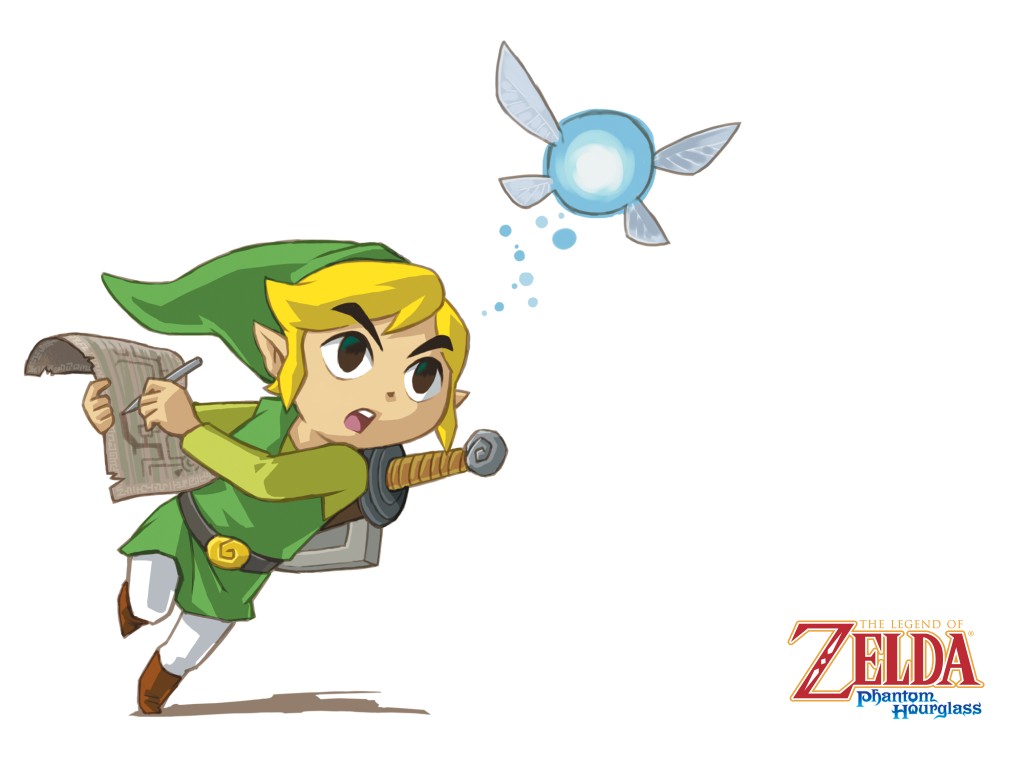
The Legend of Zelda: Phantom Hourglass


Tech Info:


Publisher: Nintendo
Developer: Nintendo
Genre: Action-RPG Adventure
Release Date: Oct 1, 2007
ESRB: EVERYONE


Story:

Phantom Hourglass picks up where Wind Waker left off. After Link and Tetra - as princess Zelda - defeated Gannon, they and their pirate friends went off in search of adventure on the high seas.While exploring new waters, they come upon the Ghost Ship, said to steal the life of anything that goes onboard.Tetra, being the spunky gal she is, hops onboard the ship and starts exploring, undaunted by the haunting tales. Soon after boarding, however, she screams and Link, trying to save her, falls into the ocean. When Link wakes up, he finds himself on Mercay Island and quickly befriends the fairy, Ciela, and her grandfatherly caretaker, Oshus. Link tells the man of his lost friend and is directed to the Temple of the Ocean King, where he encounters a man named Linebeck, who is currently trapped in the temple. Link quickly frees the man, gets the sea chart for the region, and joins Linebeck to chase after the Ghost Ship. Adventure ensues.

Now, anyone can tell that this is not a particularly original story. Link is once again saving the princess from the forces of evil. Yet the telling of this tale is done very well. From the paper cutouts of the introduction to the funny faces and illustrative gestures made by Link and Linebeck, Phantom Hourglass delivers the same old same old with a fresh face, great humor, and excellent characterization. And say what you will of the cartoony style, it lends itself very well to storytelling through pantomime.

Gameplay:

By far, this is Phantom Hourglass's greatest feature. It has been a while since I've played anything as creatively designed as Phantom Hourglass. From the start, you get the feeling that this is something different. I mean, you're so used to controlling Link with a d-pad, and now you're forced to rely completely on the stylus for almost everything. And yet, I found that the little snippets of stylus-dependent interactions in previous DS games had adequately prepared me for the maneuvers I had to perform to get Link to walk, run, toss items, roll, attack and fish. Control isn't perfect, but we'll get to that later. For those of you who haven't played Wind Waker, you take Link from island to island via a ship and fight enemies, open chests, and solve puzzles in real time.

There's not much new here, except for the Temple of the Ocean King, a multi-level dungeon with some interesting challenges. The first major challenge is the time limit. The Temple constantly drains your health unless you have the Phantom Hourglass, which you acquire early in the game. This bauble allows you to negate the effects of the temple for as long as the sand remains. Killing bosses and finding sunken chests nets you more sand, extending your time. Managing your time as you go down is important, and since you will be revisiting the labyrinth multiple times, you may find shortcuts as you gain new items.

The other challenge is the Phantoms, huge spectral warriors that roam the halls of the Temple. Phantoms cannot be killed until the end of the game, so you must avoid them at all costs. If spotted, you must flee to a safe zone which hides you from them and stops the timer. Both challenges combine to make the Temple a unique experience, and while it was at times aggrivating, overall it was tolerable.

As far as the rest of the game's play goes, much like the story, Phantom Hourglass takes the old and makes it fresh with innovative design. The two best examples would have to be the puzzles and the boss fights.

The puzzles in Phantom Hourglass aren't particularly hard, but they are creative, requiring you to use the DS in ways that you naturally wouldn't think of. Everything from the microphone to the suspend feature are required as solutions to the puzzles in this game. Being able to write on the map is a godsend, as well as an innovative way to keep track of clues and find the location of hidden treasure. And while the solutions the puzzles were usually apparent after a bit of thinking, they still remained challenging enough to keep me interested.

The other aspect of gameplay that really stood out was the boss fights. It shouldn't come as a surprise that Zelda series bosses would have different and creative weaknesses, but Phantom Hourglass' excellent use of the DS hardware added a whole new dimension. Frequent use of the dual screens and imaginative use of items is key to defeating bosses, some of which present a real conundrum until you finally reach an epiphany and then proceed to whoop arse.

There is also multi-player included via wi-fi, but I didn't get into it, so I cannot comment. Aside from that, though, Ninendo has done a great job in making a truly novel playing experience.

Graphics:

The DS is no slouch at pushing polygons, and Phantom Hourglass proves it. With graphics that approach what you'd expect from a late-era N64 or early-era PS2 game, you won't want for quality. All of the characters are rendered with enough polygons to move fluidly and not look blocky. A great attempt is made at shading too; both cel shading for the characters and lighting are done well, lending a cartoony feel that still manages to be high-quality. The only place that the visuals get dicey is during the cutscenes; whenever there is a close-up on an island or model, the detail on the textures breaks down and the presentation degrades a bit, but it's a minor point.

The best part about the graphics, though, are the character designs. For those of you who can recall the release of Wind Waker, it got harshly criticized for the characters' cartoony looks. I loved them, however, and after the ugliness that was Ocarina of Time's characters, it was nice to have a new, less hideously repulsive style. Phantom Hourglass delivers more of the same, and the result is characters who are expressive and funny. Kudos!

Sound:

I don't care what people say, I've never been a big fan of Zelda music, and after Twilight Princess' awful midi score, I didn't exactly want to hear more. Fortunately, Phantom Hourglass has a decent soundtrack, and any sound quality issues can be blamed on the DS's tiny speakers rather than a lack of quality sequencing. From epic sailing themes to the ominous dungeon tunes, Phantom Hourglass's soundtrack will not offend, and may even delight, but at the very least you can expect to get fitting music all around.

That being said, sound effects in Phantom Hourglass are pretty well done. The echoes in caves and cavernous dungeons are a nice touch, as are Link's shouts and grunts, as they really give the lad personality despite him not actually delivering any lines.

Control:

With a game like Phantom Hourglass you'd think accurate, dead-on control is a MUST. Strangely, you'd be wrong. Phantom Hourglass, despite requiring all movement and all action be controlled by the stylus, does not do a perfect or even near-perfect job making the stylus respond the way you want it to. Rolling, in particular - but also sword swings and aiming - are more difficult than I had expected them to be and are definitely not precise. The good thing is that Nintendo likely realized this and made the game a lot more forgiving than it would be otherwise. While it is somewhat of a cop-out, toning down the difficulty level to accommodate less-than-perfect control was still acceptable, considering how fun the rest of the game was.

Over:

Legend of Zelda: Phantom Hourglass was a fun game. On top of that, it was creative and used the DS in ways that really showed off the potential of the system. While it may not be the best game you'll play this year, it certainly will make you appreciate the creativity that went into its design and the solid product that was the result. I wholeheartedly advise you to play this game, if for no other reason than see that a game can be fun while still managing to use a system hardware in creative ways.

This Zone Details >>>

Tuesday, November 13, 2007

Blizzard bulking up Diablo dev team

It's been more than four and a half years since the Diablo II: Lord of Destruction expansion pack came out, and that time has apparently done nothing to diminish fans' enthusiasm for an unannounced sequel to the action role-playing series.

Even now, the slightest hint of Diablo III's existence is enough to get the Internet buzzing. Whether it's the acknowledgement that Blizzard North employees were working on an unannounced project when the studio was shuttered last August, or the e-mail of a Czech musician claiming to have recorded music for the project, rumors of Diablo III persist, popping up every few months to rile the Blizzard faithful.

This month's riling comes straight from Blizzard itself, which has posted a number of intriguing entries on the jobs section of its Web site. The positions, which were posted yesterday, call for an art director and various leads to join "the team behind Diablo I and II" for "an unannounced PC project."

The job descriptions offer few clues as to the nature of the next project. The lead 3D environment artist position calls for a candidate with a solid grasp of form, color, and light who "has experience modeling and texturing a diverse visual range of characters and creatures." Blizzard's also looking for a lead 3D character artist with "experience modeling and texturing a diverse visual range of characters and creatures" and a lead 3D character animator who has "experience animating both human and non-humanoid characters." The lead 3D character animator position also calls for knowledge of inverse kinematics and other facets of 2D and 3D animation, suggesting that the game will have some detailed visuals. Each position calls for familiarity with 3ds Max, while the lead 3D character animator will also need to know Maya and Character Studio.

Online speculation immediately turned to thoughts of Diablo, a franchise Blizzard has previously acknowledged wanting to continue at some point. Currently the company's only announced projects are the long-in-development Starcraft: Ghost for consoles and the Burning Crusade expansion for World of Warcraft.

Blizzard representatives did not immediately return requests for comment.

This Zone Details >>>

Hellgate: London


Tech info :

Publisher: EA Games
Developer: Flagship Studios
Release Date: Oct 31, 2007
ESRB: MATURE
ESRB Descriptors: Blood and Gore, Mild Language, Violence

System Requirements :

* OS: Windows XP with SP2 or Windows Vista
* Processor: 1 .8GHz or faster (2.4GHz for Vista)
* RAM: 1GB or more (2GB for Vista)
* Video: DirectX 9.0c/10 compatible device w/ 128MB RAM or better and Pixel Shader 2.0 support; requires NVIDIA GeForce 6200/ATI Radeon 9000 chipset or greater
* Audio: DirectX 9.0c compatible device
* Disc drive: 8x DVD or faster
* Hard drive: 6 GB or more free space
* Input: Keyboard and mouse
* Internet: Connection required for multiplayer

Hellgate: London is a likeable action role-playing game that answers the question "What would happen if you took all the loot lust from Diablo and fit it into a first-person shooter?" OK, maybe you weren't asking that question, but Hellgate is an interesting game. It will probably come into its own after a few more patches, but right now, it has almost as many issues as strengths.

The game takes place in London, naturally, and it's the near future. A large gate to hell--some might call it a "Hellgate" of some kind--has opened and demons have been spewing forth from it. The storyline has you, as a character in one of six classes, falling into an adventure that puts you on a path to seek out various oracles, kill a whole lot of demons, and eventually penetrate the Hellgate itself. But the storyline is rather limp. It's best conveyed by prerendered cutscenes that play out between each of the game's acts, but there are hours of often poorly written quest dialogue text and flat character exclamations between those cutscenes. The game can't seem to make up its mind as to whether or not it wants to be serious or funny, and the characters that have been placed in the game for comic relief don't work very well, with the possible exception of a guy who, through your actions, ends up having a small demon hump his face for the rest of the game. The game also has a handful of technical issues, including frame rates that randomly take a dive and hard lockups that, depending on when they occur, might make you play through a significant chunk of the game again.

This storyline plays out the same way whether you play offline or online, which essentially means that the offline mode is useless. The main point of this game is collecting loot and upgrading your character. Considering that you'll find a ton of loot that your character class can't use and that the most important part of tricking out your character is the ability to show it off to other people, there's no good reason to play offline.

The gameplay in Hellgate has you spending time in safe locations, usually train stations, where you'll take on quests, buy or sell items, and, if you're online, interact with other players. But there are a lot of different zones tying these stations together, and they're all filled with a variety of enemies for you to shoot or stab. How you attack depends on which character class you play. There are two melee classes, and these actually play out from a third-person, behind-the-back perspective, so you can see your sword and what you're cutting. The ranged classes, whether you're shooting guns or spells, work best from the first-person perspective (though you can pull out to third, if you want). Either way, playing the ranged class turns the game into a first-person shooter...but not a particularly great one because it's more RPG than action. You get the impression that when you aim your weapon at something and start firing, all you're doing is triggering some hidden series of dice rolls that determine how hard you hit. The weapons lack impact and you end up feeling really detached from the combat.

Of course, there's more to it than your basic attacks because each character class has a set of skills you can use. Marksmen can paint targets to make them take more damage, engineers can call out bots that do most of the heavy lifting in battle, evokers can cast various spells at enemies, and so on. As you gain levels, you earn more points to put into skills, but you need to be careful with how you spec out your character because there's currently no way to undo your choices. It's very possible to misspend your points and end up with a weaker-than-average character. Some similar games let you trade a chunk of in-game currency for the ability to reset your skills.

Much of Hellgate ends up feeling quite repetitive because you'll see most of the game's best tricks in the first few hours. The enemy designs look great, covering a wide range of imps, crawling demons, surprise-spawning beasts, and floating, ghostly images. But the game also reuses those same enemy designs repeatedly, using the old "let's change their name and their color" trick. The level designs look really nice at first as you explore train tunnels, torn-apart city streets, and hell itself. But the game's random level design just sort of cobbles together prefabricated pieces in slightly different ways as you play, and before too long, all of the combat zones just start to feel identical. At least they'll look quite good from a technical perspective, especially if you have a DirectX 10 setup, which allows you to turn on some really great-looking motion blur and depth of field effects.

Playing by yourself is relatively easy and fun, but even if you're playing online, you don't have to interact with other players at all. Online, though, you can party up with other players and go into combat together. This makes the game more interesting because the various class skills can work well together and the game gets tougher as you add more people to the mix. If you aren't good at socializing, you can check an "auto party" box, which attempts to automatically hook you up with other people when you enter a combat zone. Chatting in Hellgate can be tough because the interface isn't too great and there aren't too many natural breaks from combat while you're out fighting. The game also has a voice-chat option.

So what makes Hellgate worth playing? That's the craziest part. Hellgate: London is saddled with a variety of issues, yet it still manages to be totally addictive and compelling because it expertly handles one of gaming's oldest clichés: new stuff. New items and money are constantly popping out of enemies when you mow them down. Each item--even the ones that aren't suitable for your character class--is also useful in some way. You can, obviously, sell items back to any merchant in the game, but you can also break items down into base components that are the backbone of the game's crafting system. With a blueprint, some runic fragments, and a whole mess of rare tech boards, you can make new items. But you can also use those same items to upgrade your existing gear. When you find the exact type of rifle or a pair of pants with bonus stats that really help out your character, you can use these components to make sure the items remain useful as you (and your enemies) get tougher. This means you never really have to outgrow your gear, though you'll also find plenty of new, useful gear as you play.

Furthering the customization and upgrade aspect of the game, some weapons also have slots for weapon mods, such as different types of ammo, batteries, or fuel. These add properties to your weapons and can raise your accuracy, raise your attack power, add fire damage to your weapon, or make weapons cut through enemy shields. You can add mods for nothing, but you'll have to spend some of your in-game currency to remove them. You can also put any equippable item into a machine found in most stations and pay money to add effects to them. The catch is that you don't get to choose the effect; you just get to choose whether it's a common, rare, or legendary effect. So it's a risky gamble that can make your weapons insanely powerful, but it might end up giving you an effect that's only relevant to another class.

You also have to watch your character stats. Each time you level up, you're given five points to drop into accuracy, strength, stamina, and willpower. Most items have stat requirements, and those requirements stack. So if your pants require you to have five willpower points and your shoulders require three more, you'll need at least eight points in that stat to wear both. It's possible to upgrade a weapon to the point that you can't actually use it anymore, but the game doesn't warn you about this, which is supremely frustrating.

While you can certainly play the game online for free and experience most of what Hellgate has to offer, you can also subscribe for $10 a month. Right now, the main benefits for subscribers are access to a harder difficulty setting, more character slots, and more room to store gear. You also get to partake in various themed events. There have been two such events as of this writing, one based on Halloween and one based around Guy Fawkes Day. These events add a few quests, but their primary function so far seems to be adding a bunch of annoying little drops to the game, such as apples, potatoes, or blueprints, for pets and stuff. Considering you have limited inventory space, it all just gets a little overwhelming.

If you love hoarding stuff and don't mind repetition, Hellgate: London is a really neat but often uneven game that will probably keep you busy for at least a month or two, even if you don't subscribe. But, for many, the game's issues will be a real deal breaker. If you're on the fence, you might want to watch the game's patch notes to see how many technical glitches, as well as other annoyances, are cleared up.

This Zone Details >>>